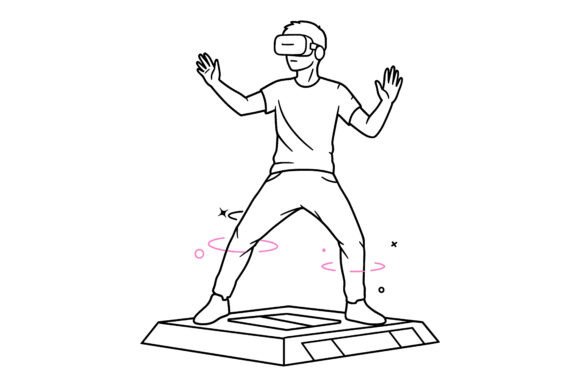
Man Using Virtual Reality Headset Silhouette: A Modern Visual for Tech and Lifestyle Projects
You’ve probably seen the image a dozen times while scrolling through blog posts, app stores, or social media ads. A clean, dark outline of a person standing with a headset covering their eyes, hands lifted as if interacting with an invisible world. That simple shape—the Man Using Virtual Reality Headset Silhouette—has become a universal shorthand for everything from futuristic gaming to immersive workplace training. But there’s more to this graphic than just a trendy aesthetic. It’s a flexible design asset that slots easily into websites, printed materials, presentations, and educational content when you need to communicate without getting bogged down in photographic details. This article digs into how real people use the silhouette file day to day, what formats matter, and what separates a forgettable insert from a genuinely useful visual.
What the Silhouette Actually Represents
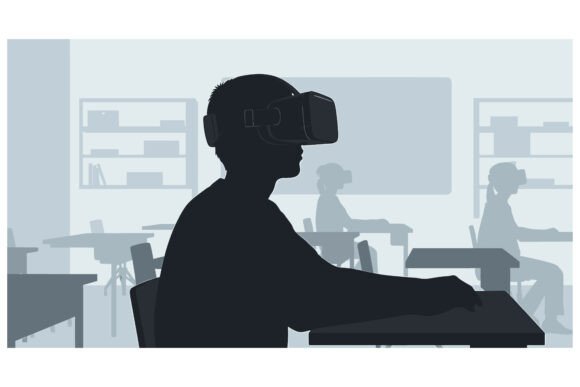
At the file level, you’re looking at two common download options: an EPS file (a vector format that scales infinitely without losing quality) and a JPG file (a raster image ready to drop into most programs). The subject is straightforward—a male figure in a standing pose, wearing a headset, often with motion controllers in both hands. The pose implies activity: leaning slightly forward, arms extended or raised, weight on one leg. It’s not a static mannequin. The outline is intentionally stripped of facial features, clothing textures, and background noise, which makes it work across wildly different color schemes and layout styles.
Designers and marketers reach for this graphic because it immediately signals virtual reality, augmented reality, gaming, immersion, and digital exploration. In an era where attention spans are tight, a silhouette says “high tech” in a fraction of a second—without clashing with your brand palette. The same illustration can live on a neon cyberpunk poster, a muted corporate training slide, or a colorful hobby blog about VR fitness. Its meaning shifts depending on the surrounding text, yet the core idea stays intact: someone is stepping into a simulated world.
Where Everyday Creators and Businesses Put This Silhouette to Work
You don’t need to be a professional graphic designer to find a use for this graphic. In fact, small business owners, bloggers, and freelance marketers often get more mileage out of a well-chosen silhouette than a complex 3D render. Here are a few practical scenarios where the Man Using Virtual Reality Headset Silhouette earns its keep.
Website Hero Sections and Blog Headers
A freelance tech blogger covering mixed-reality apps might drop the EPS file into their site’s header, coloring it a gradient blue and placing it to the right of a bold headline. Because it’s vector, they can scale it to fit any screen width without pixelation. The silhouette immediately tells first-time visitors that the site deals with VR topics, even before they read a single word. Similarly, a SaaS startup selling VR collaboration software can use the outline shape as a consistent icon across landing page sections, pairing it with short bullet points about remote teamwork.
Social Media Graphics and YouTube Thumbnails
Content creators on platforms like YouTube, Instagram, or LinkedIn often need quick, eye-catching visuals for thumbnails or carousel posts. The JPG version works right out of the box. You can place it over a vibrant background, add a semi-transparent overlay, and drop in a few lines of bold text. The silhouette’s high contrast helps the design pop in a crowded feed. A fitness influencer promoting VR workout routines might use the graphic repeatedly, changing only the background hue to match different video series—cardio (orange), boxing (red), meditation (soft purple). The silhouette stays recognizable, building a subtle brand consistency.
Printed Flyers, Posters, and Event Banners
Local gaming cafés and VR arcades frequently design event flyers. They need imagery that prints cleanly on both cheap paper and large-format banners. The EPS file becomes indispensable here. A café hosting a weekend tournament can enlarge the silhouette to poster size, layer it over a circuit-board pattern, and print without any fuzzy edges. Because the outline is isolated, adding the café’s logo, date, and location text is simple. The graphic doesn’t compete for attention; it supports the message.
Presentation Decks and Pitch Materials
Entrepreneurs pitching an AR shopping app to investors need slides that explain a concept quickly. Dense paragraphs won’t cut it. Slides with a VR headset silhouette on the left and three concise bullet points on the right can visually anchor a speaker’s talking points. Since the silhouette is monochrome-friendly, presenters can match it to their company’s brand color in one click. An educator teaching a workshop on immersive learning might also use the silhouette throughout a slide deck to represent “the learner,” helping students visualize themselves in the virtual environment being discussed.
App and Software Mockups
UI/UX designers building wireframes or demo screens for a VR training module often need placeholder graphics that look polished but don’t distract from the interface. The silhouette fits perfectly. It can sit inside a device mockup as a stand-in for actual gameplay footage, or mark the VR section of a settings menu. Because it’s an outline rather than a detailed photo, it doesn’t force the viewer’s eye to linger on the wrong part of the screen.
Why a Silhouette Often Works Better Than a Photorealistic Image
It feels counterintuitive at first. Why use a flat, shadow-like shape when you could show a high-resolution photo of someone wearing an actual headset? The answer often comes down to versatility and emotional neutrality. A photo ties you to a specific model, ethnic background, clothing style, and even lighting condition. That can alienate portions of your audience or clash with your existing design. A silhouette strips all that away. The viewer projects themselves—or their customer—onto that generic human shape. The graphic becomes gender-neutral and culturally flexible, broadening appeal.
From a practical design standpoint, silhouettes are easier to layer with other elements. You can change the fill color in Illustrator or Photoshop with two clicks. Need the man using virtual reality headset silhouette to pulse with a gradient from electric blue to magenta? Done. Need it to appear as a subtle watermark behind text on a brochure? Set opacity to 15% and move on. Photos rarely offer that kind of frictionless manipulation. Plus, EPS vector files don’t balloon in size the way high-res stock photos do, keeping your web pages faster to load.
EPS vs. JPG: Which File Should You Download and When
The choice often trips up people who don’t work with graphics daily. Here’s a simple breakdown based on real tasks:
- Choose the EPS file if you plan to edit the graphic extensively, change colors, scale it for a billboard-sized print, or separate it from its background. You’ll need vector editing software like Adobe Illustrator, Affinity Designer, or the free Inkscape. This format is a must for logos, print collateral, and any project where crisp lines at any size matter.
- Grab the JPG file for quick social media posts, blog images, and simple slide inserts. It opens in almost any program—Canva, PowerPoint, Google Slides, basic photo viewers. You won’t have the same editing flexibility, but for one-off uses where you’re dropping an image onto a pre-existing background, it saves time.
Many small business owners keep both versions on hand. They’ll use the JPG for weekly newsletters and Instagram stories to move fast, then pull out the EPS when a designer refines the website header or creates printed trade show materials. Having the silhouette in both formats means you never hit a frustrating roadblock where the file type doesn’t work for the task at hand.
Customizing the Silhouette to Fit Different Brands and Moods
Once you open the EPS version, you realize the outline isn’t a rigid finished product—it’s a starting point. Here’s how different users tweak it for their specific needs:
- Color adjustments: A meditation app might use a calm sage green fill, while an action game reviewer picks a fiery gradient. The clean outline holds up under any palette.
- Partial transparency: Overlaying the silhouette at 30% opacity over a photograph of a living room creates a modern, dreamlike effect that says “VR blends with real life.”
- Adding glowing effects: In a futuristic YouTube thumbnail, creators often apply outer glows or neon strokes to the silhouette, making it look holographic. Because the source paths are smooth, the glow doesn’t get jagged.
- Clipping masks: Some designers place a photo inside the silhouette’s body shape—say, a starry sky or circuit board pattern—so the figure itself contains the theme. The outline acts as a window, not just a flat shape.
- Combining with type: The pose (arms forward) often creates negative space that can hold a headline. A blogger might position their title inside the arc between the hands and the headset, unifying image and text.
This adaptability is why you’ll find the same base file in the toolkit of a real estate agent marketing virtual property tours and a health coach promoting VR mindfulness. Each one makes it their own by shifting a few visual properties.
Practical Considerations Before You Hit Download
Even a simple graphic deserves a thoughtful soak. Before adding the silhouette to your project, consider a few things that can save headaches later.
Licensing and Usage Rights
Not all silhouette files come with identical permissions. Some marketplaces offer royalty-free licenses that allow commercial use in unlimited projects, while others restrict use in merchandise or templates for resale. Always check the terms. If you’re designing a T-shirt to sell, a standard license might not cover it. The few extra minutes reading the small print prevent awkward takedown notices.
Resolution Needs for Specific Mediums
If you’re working exclusively with the JPG, confirm the pixel dimensions. A 2000-pixel-wide image looks sharp on a blog but might pixelate when blown up for a conference backdrop. That’s when you really need the vector EPS. Similarly, printing on a dark background? The JPG may have a white-filled surround that you’ll need to mask out. The EPS, being transparent by nature, doesn’t have that problem.
Contextual Relevance
The Man Using Virtual Reality Headset Silhouette makes sense when your content genuinely ties to VR, AR, simulation, gaming, or futuristic tech. Using it as a generic “digital” icon on a site about tax preparation software, for instance, can confuse visitors. Make sure the metaphor holds. If you’re illustrating “innovation” or “modern lifestyle,” the silhouette works. If your topic is strictly 2D web development with no immersive component, it might feel shoehorned.
Accessibility and Contrast
Silhouettes rely entirely on contrast. Placing a dark outline on a dark background loses the shape entirely. Always test your composition against your site’s accessibility standards. A quick check with a color contrast tool ensures people with visual impairments can still parse the image, especially if it carries important information like a call-to-action placement.
Real-World Examples Across Different Fields
To ground all this in reality, let’s walk through a handful of everyday users and how they integrate the silhouette into their workflow without a dedicated design team.
- The ed-tech developer: Building a virtual classroom app. The silhouette goes into onboarding screens as a friendly figure wearing a headset, paired with text like “Step into your lesson.” Because the outline is gender-neutral, it avoids alienating any student.
- The independent game reviewer: Runs a YouTube channel with quick-turnaround reviews. She keeps the JPG silhouette in a Canva template. For each new game, she swaps the background color and adds the game logo. The silhouette becomes her channel’s visual signature, saving her hours every week.
- The corporate trainer: Preparing a slide deck on safety simulations for warehouse workers. He doesn’t want cartoony clip art but also can’t afford custom photography. The EPS file fits perfectly, colored in the company’s safety orange. It looks professional without being childish.
- The mental health counselor: Offers VR-based exposure therapy. On her website’s services page, she places the silhouette beside a calm description of the process. The image signals “technology,” but the soft blue fill she chose keeps the vibe soothing, not sci-fi.
- The small gift shop owner: Sells custom phone cases. She uses the silhouette with a clipping mask of a galaxy print, slaps it on a dark case background, and markets it as a “VR Lover” design. Because the file is vector, the print quality stays sharp on every phone model.
Keeping the Graphic Fresh Over Multiple Uses
If you’re like many creators, you’ll return to the same silhouettes repeatedly. To avoid visual fatigue—both for yourself and your audience—vary the treatment each time. Rotate the figure slightly (if your license and software allow). Experiment with duotones, halftone patterns, or even animating the silhouette as a simple GIF for social posts. Small changes make a big difference when the core shape stays the same. One month, the silhouette might appear filled with a photograph of a forest; the next, it becomes an outline glowing against a dark mode website. This keeps your brand feeling dynamic without requiring a completely new graphic each time.
The Man Using Virtual Reality Headset Silhouette endures because it solves a communication problem efficiently. It’s recognizable, editable, and culturally flexible in a way that specific photographs rarely are. Whether you’re a solo blogger racing to publish a post, a startup founder crafting investor slides, or a teacher making a handout, the silhouette gives you a quick visual language for the big ideas of immersion, exploration, and digital escape. Just pick the right file format for the task, tailor the colors and composition to your audience, and make sure the image actually supports the message rather than decorating empty space. When used thoughtfully, the silhouette becomes more than a stock graphic—it turns into a small but powerful tool in your everyday creative toolkit.