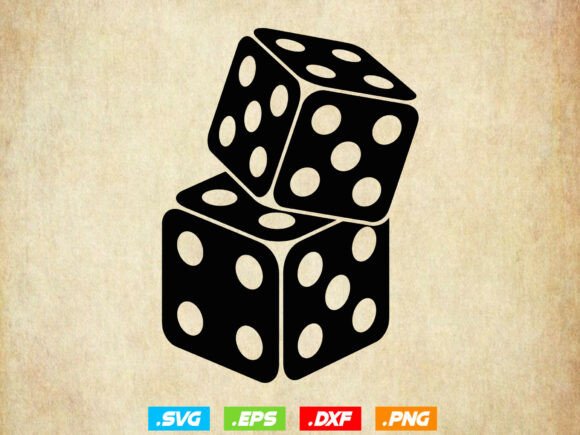
How Dice SVG, Dice Silhouette, and Gambling SVG Are Reshaping Visual Storytelling in Design
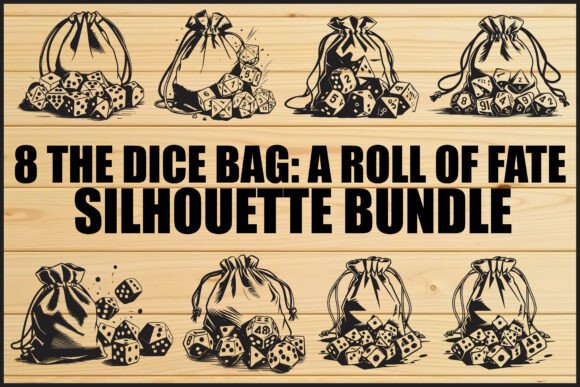
Designers and creative entrepreneurs are constantly hunting for assets that feel alive and textured, not sterile and overused. In the last few years, one category has quietly surged in popularity across branding kits, merchandise mockups, gaming interfaces, and even educational tools: dice-themed vector graphics. Specifically, Dice SVG, Dice Silhouette, and Gambling SVG have become go-to resources for professionals who want to inject a sense of chance, play, and retro gaming culture into their visual work. When paired with culturally rich variants like the Ludo Dice Silhouette, these digital assets open up a creative lane that blends nostalgia with modern precision.
This shift isn't just about adding clip art to a flyer. It reflects a deeper movement in the design world: the demand for instantly usable, high-resolution vector files that adapt seamlessly across cutting machines, screen printing, laser engraving, and responsive web layouts. A single download containing SVG, EPS, DXF, and a 300 dpi PNG file gives creators the flexibility to move from a concept to a physical product in hours, not days. The dice motif, with its universal recognition and layered symbolism, sits at the intersection of gaming culture, probability psychology, and visual minimalism—making it far more versatile than most decorative elements.
The Symbolic Weight Carried by a Simple Dice Graphic
A die is never just a cube with dots. In visual communication, dice represent risk, fortune, strategy, and the unpredictable nature of outcomes. When a brand uses a dice icon or a stylized Dice Silhouette in its packaging or web design, it immediately signals something about identity: this is a company or product that understands play, chance, or gamified experiences. Casinos and gaming platforms have long understood this, which is why Gambling SVG packs are in constant demand for everything from app interfaces to promotional banners. But the application goes well beyond gambling itself.
Board game cafes use dice vectors on chalkboard menus. Financial literacy apps use dice icons to explain risk diversification. T-shirt designers incorporate worn, distressed dice silhouettes into streetwear collections. Event planners print oversized dice decals for casino-themed fundraisers. In each case, the visual shorthand does heavy lifting—the audience understands the emotional tone before reading a single word. The availability of clean, scalable Dice SVG files means these projects can maintain that emotional resonance without sacrificing technical quality across different output sizes.
Why Vector Formats Are Winning Over Raster in 2025
The rise of cutting machines like Cricut and Silhouette has fundamentally altered what independent creators expect from a digital download. Ten years ago, a high-resolution PNG might have sufficed for most digital projects. Today, makers and small business owners need files that their machines can read directly—paths, not pixels. An SVG file is essentially a set of mathematical instructions for drawing shapes. It scales infinitely without degradation, which means a Dice Silhouette pulled from an SVG can look razor-sharp on a 2-inch sticker or a 15-by-18-inch wall decal.
This technical advantage extends into the professional print world as well. EPS files remain the backbone of many commercial printing workflows, and having both an EPS and an SVG in the same download eliminates the friction of file conversion. DXF files serve the CNC and laser engraving communities, where precision tool paths are non-negotiable. When a single purchase includes all these formats—plus a ready-to-use 300 dpi PNG for quick digital placement—it reflects an understanding that modern creative work is rarely confined to one medium. A designer might start with a screen mockup in Figma, move to a vinyl cut for a storefront window, and then produce an engraved wooden sign, all using the same core dice graphic.
Ludo Dice Silhouette and the Influence of Regional Gaming Culture
While standard six-sided dice are globally recognized, the Ludo Dice Silhouette taps into a specific cultural vein that runs deep across South Asia, Africa, and parts of Europe. Ludo, derived from the ancient Indian game Pachisi, has experienced a massive digital renaissance through mobile gaming. The distinctive cube with its familiar dot patterns is instantly nostalgic for hundreds of millions of people who grew up rolling dice on colorful cloth boards with family members.
For brands and creators targeting diasporic communities or culturally themed events, a Ludo dice graphic carries layers of meaning that a generic casino die simply cannot replicate. It evokes childhood, family competition, and cross-generational bonding. Merchandise designers incorporate Ludo Dice Silhouette vectors into apparel lines celebrating South Asian heritage. Event planners use them for wedding reception games and cultural festival booths. The specificity of the reference makes the design feel intentional and personal rather than generic—and that intentionality is exactly what audiences reward with attention and engagement in an oversaturated visual marketplace.
Gambling SVG and the Shift Toward Honest, Thematic Design
The gambling and gaming industry has matured significantly in its visual language over the past decade. Gone are the days of gaudy, oversaturated clip art plastered across every casino affiliate site. Modern gambling-adjacent brands—whether they are poker training platforms, responsible gaming organizations, or entertainment venues—prefer cleaner, more editorial aesthetics. Gambling SVG files that emphasize silhouette and line art allow designers to allude to the theme without being visually aggressive.
This restraint aligns with a broader design trend toward atmospheric imagery. A single well-placed dice silhouette on a moody background can convey more sophistication than a cluttered composition full of chips, cards, and neon symbols. High-resolution vector silhouettes also work beautifully in layered designs, where opacity, blending modes, and subtle textures transform a simple shape into something with depth and intrigue. The 300 dpi specification matters here too: when these SVGs are rasterized for web use or printed materials, the clarity holds up even at larger dimensions like the 15-by-18-inch range, making them suitable for poster designs and large-format signage.
How Creators Are Monetizing Dice-Themed Digital Assets
The licensing structure attached to many dice vector packs—allowing physical product creation while restricting digital resale—has created a thriving micro-economy around these assets. A single purchase of a Dice SVG bundle can fuel an entire product line. Entrepreneurs use them to design and sell t-shirts, tote bags, phone cases, enamel pins, stickers, wall art, and even embroidered patches. The versatility of a dice motif means it appeals to board game enthusiasts, math teachers, probability nerds, gamblers, and casual gamers alike—a surprisingly broad addressable market.
Print-on-demand platforms have lowered the barrier to entry even further. A creator can upload a dice silhouette design to a platform like Redbubble or Printify, apply it to dozens of products, and start generating passive income without ever holding inventory. The key to standing out in these crowded marketplaces, however, is design quality. Using a professionally crafted vector file with clean lines and proper scaling behavior separates a product that looks premium from one that appears amateurish. The high resolution of 300 dpi ensures that even when the design is printed on larger items like blankets or canvas prints, the edges remain crisp and the details stay intact.
Integration Across Design Ecosystems and Cutting Machines
One of the underappreciated practical benefits of well-structured SVG files is how smoothly they integrate with industry-standard software. Adobe Illustrator, Affinity Designer, Inkscape, CorelDRAW, and even browser-based tools like Canva now accept SVG uploads natively. For cutting machine users, software like Cricut Design Space and Silhouette Studio reads SVG paths directly, allowing makers to skip the tedious image-tracing step that often introduces imperfections.
This compatibility streamlines the workflow for multi-disciplinary creators. A freelance designer might use a Dice Silhouette for a client's logo concept in Illustrator, then reuse the same file to cut vinyl decals for the client's physical storefront, and later adapt it for an embroidered patch on employee uniforms. The consistency across touchpoints—both digital and physical—strengthens brand cohesion. For entrepreneurs juggling multiple product categories, this kind of file flexibility saves hours of reformatting and troubleshooting, which directly translates to faster time-to-market and lower production costs.
The Psychology Behind the Dice Motif's Enduring Appeal
Understanding why dice graphics resonate so strongly requires a brief look at the psychology of games. Dice are among the oldest gaming implements in human history, with precursors dating back to ancient Mesopotamia. They represent a fundamental human truth: some outcomes are beyond our control, but the act of rolling—of participating—matters anyway. In an era defined by algorithmic curation and increasingly predictable digital experiences, dice imagery reintroduces the thrill of uncertainty.
This psychological charge makes Gambling SVG and dice-related graphics particularly effective in marketing contexts that aim to excite or engage. A promotional email for a product launch might use a dice animation to build anticipation. A webinar registration page might incorporate dice silhouettes to suggest that attendees will leave with actionable insights—a roll of the dice that pays off. Even in non-gaming industries, the metaphor of rolling the dice on a new strategy or investment is universally understood. Designers who wield this symbolism thoughtfully create work that communicates on both a visual and emotional level simultaneously.
Selecting the Right Dice Assets for Different Project Types
Not all dice vectors are created equal, and matching the right style to the right project context is a skill that separates experienced designers from novices. A highly detailed, textured Dice SVG with shading and highlights might work beautifully for a poster or a website hero image, but it could become muddy when reduced to a 1-inch embroidery design. Conversely, a clean, minimalist Dice Silhouette might look too stark for a vintage-themed board game menu but perfect for a modern tech startup's icon system.
Cultural sensitivity also plays a role in asset selection. Using a Ludo Dice Silhouette without understanding its cultural context can come across as superficial or appropriative. But when used authentically—by creators who share that cultural background or who are designing for communities that will recognize and appreciate the reference—it becomes a powerful connector. The same principle applies to gambling-themed designs: projects aimed at responsible gaming or educational contexts benefit from more neutral, informative visual treatments rather than the high-gloss aesthetic associated with casino marketing.
The 300 dpi Standard and Why It Still Matters
Despite the increasingly digital nature of design work, the 300 dpi print standard remains non-negotiable for any project that will exist in physical form. Screens may only require 72 or 144 dpi, but printing presses, even home inkjet printers, benefit enormously from higher resolution source files. When a Dice SVG download includes a pre-rendered 300 dpi PNG, it gives creators an immediate option for projects that don't require vector scalability—like social media graphics or digital mockups—while still providing the raw SVG for when full scalability is needed.
This dual-format approach acknowledges a practical reality: many designers prototype quickly in raster before committing to vector workflows. Having both formats in one download respects the creator's time and reduces the friction of switching between tools. The inclusion of DXF and EPS formats further anticipates the needs of niche but important user groups, from CNC hobbyists to professional print shops running legacy equipment. Thoughtful file packaging like this reflects a mature understanding of the fragmented, multi-tool reality of modern creative work.
As the lines between digital and physical products continue to blur, the humble dice graphic has proven to be anything but a passing trend. Whether rendered as a bold silhouette, a detailed vector illustration, or a culturally specific gaming reference, dice-themed assets offer a rare combination of universal recognition and deep symbolic resonance. For the designer, maker, or entrepreneur willing to invest in high-quality source files, the creative possibilities stretch far beyond the roll of a single die.