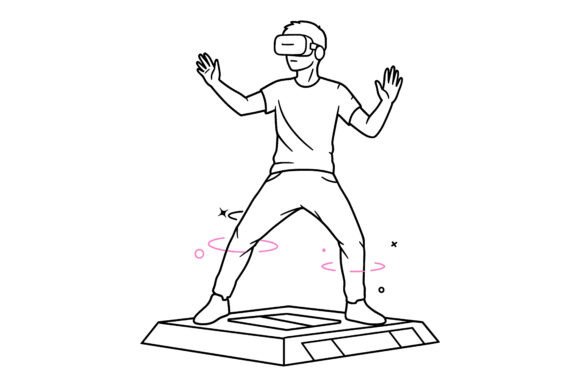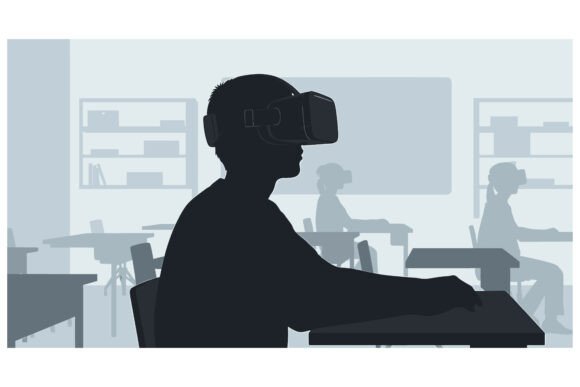
Student Wearing VR Headset in Classroom
Walk into a growing number of schools today and you might see something that feels pulled from a science fiction film. A teenager sits at a wooden desk, fingers hovering in the air, a sleek black headset covering their eyes. They are not playing a game during break. They are dissecting a virtual frog in biology, walking through ancient Rome in history class, or manipulating 3D geometric shapes in math. The image of a student wearing VR headset in classroom captures a shift in how we think about teaching, attention, and the physical boundaries of a school. It is no longer a speculative concept. It is a practical tool showing up in lesson plans, budget meetings, and curriculum debates around the world.
For some, the sight raises excitement. For others, skepticism. Behind the visual of a young person immersed in a digital layer stands a deeper conversation about cost, access, learning outcomes, and how we prepare both students and teachers for tools that change fast. This article unpacks what the image represents, who finds value in it, and how a simple graphic like the Student wearing vr headset in classroom silhouette 1 EPS File 1 JPG File fits into broader communication needs across industries and roles.
What the Image Communicates Beyond the Technology
At first glance, a photograph or vector illustration of a student wearing VR headset in classroom shows a piece of hardware. Look longer and you see themes of engagement, future readiness, digital equity, and the changing role of a teacher standing nearby. The silhouette version in particular—offered as an editable EPS file and a ready-to-use JPG file—strips away branding, age, gender, and setting details. This makes it useful for people who need to talk about virtual reality in education without being tied to a specific device manufacturer or a recognizable face. The silhouette shifts focus from who is learning to how learning happens.
Educators might use the graphic in a presentation to a school board. A blogger covering edtech trends might drop the JPG into an article header. A small business owner selling VR content packs could place the EPS file on product packaging or a website banner. Each use case draws on the same core idea but activates it for a different purpose and audience.
Why Different Audiences Pay Attention to This Scene
Not everyone views a classroom VR setup through the same lens. A parent might wonder about screen time and eye strain. A curriculum director might focus on measurable learning gains. An entrepreneur sees a growing market. A graphic designer sees a visual asset that communicates modern education in a single glance. Recognizing these differences helps explain why the topic generates both enthusiasm and thoughtful caution.
Educators and School Administrators
For teachers and principals, a student wearing VR headset in classroom raises practical questions first. Does the hardware integrate with existing lesson management tools? Can a single headset be shared across multiple periods without hygiene or calibration headaches? How steep is the training curve for staff who already feel stretched? Many educators report that initial excitement cools if the answer to classroom management remains unclear. Success often depends on choosing applications that save a teacher time rather than adding another layer of monitoring. A history teacher using a VR walkthrough of ancient Athens must still tie the experience to learning objectives and assessment. The headset becomes a bridge, not a destination.
Students and Parents
Young learners often adapt to VR controls faster than adults expect. The real question for families is less about technical skill and more about balance. Is the immersive session replacing hands-on lab work or enriching it? Does the school provide equal access, or do some students watch while others wear the headset? Parents also care about content safety in an environment where a child's view is literally walled off from the teacher's direct line of sight. These concerns do not make VR wrong for classrooms. They make transparency and clear communication from schools essential. When a district shares photos or silhouettes of students in VR, the narrative should include the safeguards in place.
EdTech Developers and Content Creators
For teams building educational VR modules, the silhouette graphic becomes a flexible design element. The EPS file lets them scale the image without losing quality, recolor it to match brand guidelines, or layer it over gradient backgrounds for app store screenshots. The JPG file provides a quick visual for social media posts, blog headers, or investor pitch decks. Developers think in terms of user experience and platform compatibility. They ask whether a classroom VR experience runs smoothly on standalone headsets without requiring a gaming PC in every room. When they use an image of a student in VR, they are signaling that their product was built with real school environments in mind—limited space, shared devices, and the need for quick resets between classes.
Marketers, Designers, and Small Business Owners
A freelance graphic designer might download the Student wearing vr headset in classroom silhouette 1 EPS File 1 JPG File to fulfill a client request for an education-themed brochure. The vector format means easy customization. Change the color to navy blue for a corporate training manual or keep it black for a minimalist workshop flyer. A blogger writing about future careers can use the image to anchor a post about technology skills. Small business owners who sell educational toys or stem kits might place the silhouette on a landing page to quickly communicate their niche. The file pair covers both quick-use scenarios and deeper design projects, which matters when time and budget are tight.
How Beginners and Experienced Users Approach Classroom VR Differently
A teacher trying VR for the first time often prioritizes ease of use and reliability. They want a headset that turns on quickly, a library of content aligned with state standards, and the ability to manage student attention without becoming an IT technician mid-lesson. Trial runs with a single device build confidence. Early wins often come from short, focused experiences—a 10-minute virtual field trip rather than an hour-long module—so students and teachers can debrief together while the lesson is fresh.
Experienced users, including technology coaches and lab coordinators, think about scalability and data. They evaluate whether the software tracks student progress, how headsets handle updates across a fleet of devices, and what professional development sequences help reluctant colleagues move from observation to facilitation. They also look harder at durability. A headset in a middle school classroom endures different stress than one in a quiet home office. These users may search for terms like rollover protection, device management console support, or sanitization protocols alongside their content needs.
Practical Examples Across Roles
A college professor teaching art history might use VR to place students inside a reconstructed Renaissance chapel. The lesson goal is not novelty. It is spatial understanding. Seeing a fresco on a flat screen differs from standing beneath it in a virtual space where scale becomes obvious. The professor needs high visual fidelity and accurate modeling. A cartoonish approximation would undermine the learning objective.
A middle school science teacher might use VR to simulate a chemistry lab with reactions that would be unsafe or too expensive to run in a real classroom. The priority is safety and repeatability. Students can make mistakes without real-world consequences, then try again. The teacher uses a dashboard to monitor progress across multiple headsets simultaneously, stepping in when someone appears stuck or confused.
A freelance illustrator downloading the silhouette file may not work in education at all. Perhaps they are designing a book cover for a near-future novel about digital culture. The EPS file gives them precise control over the shape, allowing integration with other vector elements. The stock JPG serves as a quick placeholder during early drafts. Their priority is visual impact and licensing clarity, not pedagogy. Yet the image still carries the weight of its classroom setting, adding a layer of meaning to their project.
A corporate training designer might adapt the classroom VR concept for onboarding new hires in a manufacturing firm. The same principles of immersive learning apply, but the audience is adult and the context is professional. Using classroom imagery in their materials signals that the training approach is grounded in proven educational methods, not just flashy technology.
Evaluating Whether Classroom VR Fits Your Goals
Before investing time or money into VR for learning, ask what problem you are trying to solve. If students struggle to visualize abstract concepts—molecular structures, historical timelines, electromagnetic fields—VR can turn invisible ideas into tangible objects. If the goal is to replace worksheets with something interactive but the curriculum remains passive, the headset becomes an expensive multiple-choice viewer. The technology itself is neutral. The surrounding design of the lesson decides its value.
Budget conversations benefit from specificity. Rather than asking whether a school should buy VR, frame the discussion around a particular module, grade level, and intended outcome. A single headset used in stations during science rotations costs less and may yield clearer data than a full class set deployed without a plan. Small pilots create space to learn what works locally and adapt before committing larger sums.
Long-Term Usefulness and the Silhouette as a Lasting Visual
Trends in educational technology come and go, but the silhouette of a student wearing VR headset in classroom may remain relevant longer than a photograph of a specific device. Hardware dates quickly. A sleek headset today looks bulky in three years. The EPS silhouette avoids obsolescence by removing product details. For publishers, courseware developers, and advocacy groups, this makes the file a practical long-term asset. Update the surrounding text, change the color palette, and the graphic still works.
The dual file format also supports different workflows. The JPG loads immediately into presentations, blog posts, and social media drafts. The EPS file opens in Adobe Illustrator, Affinity Designer, or similar tools for deeper editing. Having both formats reduces the friction of switching between quick communication and polished output. For a small business owner managing their own marketing, this flexibility saves time and reduces the need for additional asset purchases.
Creativity, Commercial Value, and Ethical Considerations
When using educational imagery for commercial purposes, authenticity matters. Audiences can tell when a stock photo feels staged. The silhouette version sidesteps some of that risk through abstraction. It does not pretend to show a specific moment. It represents an idea. This abstraction also makes it easier to use across cultures and languages. A silhouette of a student in a classroom with a VR headset communicates the concept without reinforcing stereotypes about who learns with technology.
For creators building lesson materials, the image can anchor worksheets, slide decks, and online course thumbnails. For entrepreneurs, it can signal that a product or service belongs in the education space. For journalists covering digital transformation in schools, it provides a headline image that readers recognize instantly. Each use carries different weight and requires different levels of accuracy about what the depicted technology can actually do.
The practical through line across all these audiences remains the same. A student wearing VR headset in classroom represents a meeting point between human curiosity and digital possibility. Whether you are teaching, designing, selling, or reporting, understanding what that meeting point looks like—and what it omits—helps you use the image and the technology behind it more thoughtfully.