What Makes Customer Support Headset Vector Graphics So Versatile in Everyday Projects
You've probably seen that iconic silhouette a hundred times without realizing how many doors it opens. The customer support headset vector represents more than just call center imagery. It's a visual shortcut for communication, reliability, and human connection. Whether you're running a small business, designing merchandise, or building a website, this graphic carries weight that photos sometimes can't match.
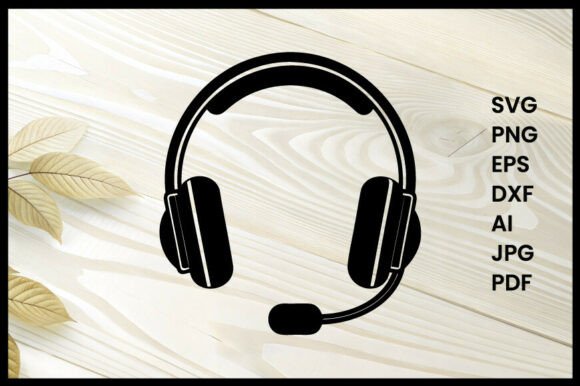
Vector graphics live in a different universe than regular images. They scale infinitely without losing sharpness, which means a design that looks crisp on a business card stays equally crisp on a billboard. The black and white variant especially offers that clean, no-nonsense aesthetic that prints beautifully across countless materials. You don't need to be a professional designer to put these files to work either. With formats like AI, EPS, SVG, PNG, JPG, PDF, and DXF included in a typical download package, compatibility becomes a non-issue.
The Real-World Value of a Black and White Gaming Headset Vector with Microphone
A lot of people search specifically for a black and white vector graphic of a gaming headset with microphone because it straddles two worlds. On one side, you have the unmistakable visual of competitive gaming culture. On the other, the same silhouette works surprisingly well for professional support imagery. The microphone element is key. Without it, a headset is just headphones. With it, you're instantly communicating two-way conversation, teamwork, and active listening.
Gaming communities have embraced these vectors for everything from Twitch overlays to esports team branding. The monochrome palette means the graphic doesn't fight with other design elements. You can drop it into an existing color scheme without clashing. Streamers often need quick, recognizable icons for panels, alerts, or merchandise mockups. Having a ready-to-use vector eliminates the friction of commissioning custom artwork from scratch every time.
Who Actually Downloads These Graphics and Why
The audience stretches much wider than you might expect. Small business owners grab these files to create their own customer service signage without hiring a designer. Print-on-demand entrepreneurs add the graphic to t-shirts, mugs, and phone cases through platforms like Printful or Redbubble. Event organizers use them for directional signage at help desks. Freelancers incorporate them into pitch decks when they want to visually represent "support included" in their service packages.
There's also a growing segment of DIY crafters who use DXF files with cutting machines like Cricut or Silhouette. They cut vinyl decals for laptops, create iron-on transfers for tote bags, or etch the design onto glassware. The fact that these vectors are ready to use directly after download removes a major barrier for people who want professional results without the steep learning curve of vector software.
Customer Support Headset Vector Illustration as a Communication Tool
When you think about it, a customer support headset vector illustration functions almost like a universal symbol. Similar to how an envelope icon means email or a magnifying glass means search, the headset with microphone has become shorthand for assistance. This makes it incredibly valuable for user interface design, mobile apps, and website navigation. Users don't need to read text to understand that clicking this icon connects them to help.
HR departments have picked up on this too. Internal training materials, onboarding handbooks, and employee directories frequently use these graphics to denote support roles or IT help desk contacts. The vector format means the same file works across print handouts and digital presentations without any quality compromise. You're not juggling multiple file versions for different mediums.
Print-on-Demand Possibilities That Go Beyond the Obvious
Many buyers gravitate toward these vectors specifically because the listing mentions print-on-demand compatibility. The obvious products come to mind first. T-shirts with a bold headset graphic and text like "Tech Support Mode" or "Customer Service Ninja." Mugs that make call center employees chuckle during their morning coffee. But the less obvious applications often prove more profitable for sellers and more meaningful for buyers.
Consider memorial products for gaming communities. When a beloved online friend passes, groups sometimes create tribute merchandise featuring a gaming headset silhouette alongside a gamertag. Pet accessories have also emerged as an unexpected niche where headset graphics appear on bandanas or bowls for "support animal" themed products. The versatility of a simple vector gives creators room to layer meaning onto the design.
Navigating File Formats Without Getting Overwhelmed
Downloading a bundle that includes AI, EPS, JPG, PNG, PDF, SVG, and DXF can feel like opening a toolbox where you only recognize the hammer. Each format serves a different purpose, and understanding this prevents frustration later. AI and EPS files are your editable source files. You'll open these in Adobe Illustrator or a compatible vector editing program if you need to change colors, resize elements, or modify the design.
SVG files have become the darling of the web development world. They load fast, scale responsively, and can be styled with CSS. If you're putting the graphic on a website, SVG is often your best choice. PNG offers transparency, which matters enormously when placing the graphic over colored backgrounds. JPG works fine for simple previews but lacks that flexibility. DXF files are specifically for CAD software and cutting machines, bridging the gap between digital design and physical fabrication.
PDF versions give you a print-ready option that opens on practically any device without special software. You can take the PDF to a local print shop and get consistent results. Having all these formats in one download means you're not locked into a single use case when you first purchase the design.
Common Considerations Before You Print or Produce
Resolution gets talked about constantly in design circles, but with genuine vectors, it genuinely doesn't matter in the way people assume. The "high-resolution" label in product descriptions refers to the raster formats included, like the JPG and PNG files. The AI and EPS source files have no resolution because they're built from mathematical paths, not pixels. You can enlarge them indefinitely without degradation.
Color adjustments deserve attention though, especially with black and white designs. Some printing methods interpret rich black differently than standard black. If you're sending the design to a screen printer for apparel, you might want to check whether the black in the file uses CMYK values that work well with their equipment. Most print-on-demand platforms handle this automatically, but it's worth being aware of if you're working with local producers.
Licensing is another practical consideration. These downloads typically come with commercial use rights that allow you to sell finished physical products. However, reselling the digital file itself usually isn't permitted. Creating products like wedding cards, greeting cards, invitation cards, mugs, t-shirts, and stickers falls squarely within acceptable use. The distinction matters if you're building a business around printed merchandise rather than just making one-off personal items.
Creative Scenarios Where These Vectors Shine Unexpectedly
Business coaching materials often feature these graphics to represent accountability partners or mentorship relationships. The headset visual communicates "I'm listening" without needing additional context. Real estate agents have used them in listing presentations to show they offer round-the-clock client support. Even healthcare providers have adopted similar imagery for telehealth service promotion, where the microphone-equipped headset clearly signals remote consultation capabilities.
Educational settings present another rich vein of possibility. Online course creators use the graphic in lesson thumbnails to mark Q&A sessions or office hours. School administrators print them on door signs for counseling offices or tech support rooms. The black and white simplicity means these signs don't look overly corporate or intimidating, which matters in environments where approachability is paramount.
Community theater groups and event planners sometimes need quick, recognizable symbols for volunteer coordination stations or information booths. A printed sign with a clean headset graphic communicates the function immediately, even in crowded, noisy environments where reading detailed text would be impractical. This kind of visual efficiency rarely gets celebrated, but it solves real communication problems at ground level.
Why Vector Over Raster Becomes a Practical Advantage
Photographs of actual headsets come with baggage. Specific models, brands, lighting conditions, and background clutter can distract from the message. A vector illustration strips all that away. You're left with the essential concept rather than a particular product. This universality makes the graphic feel timeless rather than dated. The headset silhouette from five years ago looks essentially the same as one created today, whereas photos of tech products age quickly.
From a production standpoint, vectors also cooperate better with specialty printing techniques. Foil stamping, embossing, and screen printing all prefer clean vector paths over pixel-based images. The crisp edges produce cleaner results across these methods. If you're planning to create premium-feeling business materials, this technical distinction translates directly into perceived quality.
Making the Most of an Instant Download Investment
The instant download aspect of these purchases changes how quickly you can act on an idea. There's something psychologically powerful about having an inspiration, purchasing the file, and starting your project within the same hour. Traditional design procurement might involve days of back-and-forth communication, revisions, and waiting. Digital vector downloads collapse that timeline dramatically.
Many creative entrepreneurs keep a library of versatile vectors like these on hand for rapid prototyping. When a client mentions an upcoming customer appreciation event, the designer can pull up the headset graphic within minutes and mock up potential merchandise or signage before the conversation even ends. This responsiveness often leads to more projects and stronger client relationships.
Small print shops and local makerspaces have also benefited from maintaining collections of commercial-use vectors. Walk-in customers with vague ideas can browse through available graphics, find something that resonates, and have a finished product same-day. The headset vector specifically serves walk-in small business owners who suddenly need help desk signage or support team apparel ahead of a launch event.
Design Flexibility Without the Advanced Skills
One underappreciated aspect of receiving AI and EPS source files is the ability to make simple edits without being a vector art expert. Changing the fill color, removing the microphone element, or combining the headset with other graphics becomes achievable with even basic software knowledge. Plenty of free and low-cost vector editing programs can handle these straightforward modifications.
The black and white nature of the original graphic actually invites customization rather than limiting it. You can easily apply your own brand colors, add text, or layer the silhouette over photographic backgrounds to create composite designs. Some users have even turned the headset outline into a clipping mask for texture or pattern fills, resulting in creative variations that still retain the recognizable silhouette.
For those who prefer not to edit at all, the included PNG with transparency means you can place the graphic directly onto any background without awkward white boxes around the edges. This alone solves a common frustration for people accustomed to working with regular JPG images in tools like Canva or Microsoft Word.
The beauty of working with a customer support headset vector lies in how it disappears into the background of your creative process. You're not wrestling with the file or compromising on placement. The graphic simply does what you need it to do, across formats, across materials, across contexts. That kind of reliability might not be flashy, but for anyone who has ever fought with a pixelated image at 2 AM before a deadline, it's genuinely valuable. Whether you're printing stickers for a gaming convention or designing wedding invitation inserts for a tech-savvy couple, having the right vector at your fingertips makes the difference between settling and executing exactly what you envisioned.