Transform Your Desk with an Anatomy Mouse Pad PNG Design
A workspace should feel personal. Whether you spend hours coding, designing, gaming, or writing, the small details around you shape your mood and productivity. One detail often overlooked is the mouse pad. A thoughtfully chosen anatomy mouse pad PNG design can shift an ordinary desk into a space that feels curated, darkly elegant, and uniquely yours. The gothic anatomy chart aesthetic brings a scholarly, vintage dissection-table atmosphere that appeals to medical students, science enthusiasts, horror fans, and anyone drawn to the macabre beauty of old anatomical engravings.
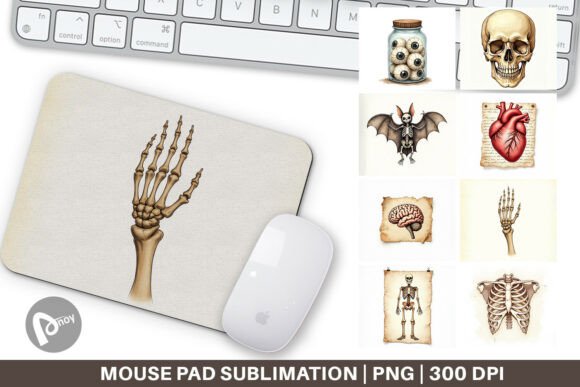
The set gaining attention includes 8 high-resolution PNG files, each sized at 9.5 by 8.1 inches and rendered at 300 dpi. These are not flattened, low-quality JPEGs pulled from a random search. They are crisp, layered files ready for sublimation printing, allowing you to produce a mouse pad that looks like it belongs in a Victorian apothecary or a modern streamer’s dark-academia setup. But owning the files is only the first step. How you evaluate, prepare, and use them determines whether your final product stuns or disappoints.
Why People Are Drawn to the Anatomy Mouse Pad Aesthetic
There is a reason vintage anatomical illustrations never go out of style. The detailed linework, the muted sepia and charcoal tones, the Latin labels curling around organ systems — they communicate intellect and a certain rebellious elegance. A sublimation mouse pad featuring these designs does more than protect your desk. It becomes a conversation piece. For creators and entrepreneurs, it subtly reinforces a brand identity rooted in depth and authenticity. For educators and students, it keeps the wonder of human biology within arm's reach. For gamers, it adds an unexpected layer of sophisticated darkness to a battlestation often dominated by neon and aggressive typography.
Common Mistake: Assuming Any Image File Works for Sublimation
A frequent misunderstanding involves the difference between a standard image file and one built for sublimation. You cannot take a low-resolution screenshot, stretch it to mouse pad dimensions, and expect a gallery-quality result. Sublimation printing relies on dye bonding with polyester surfaces under heat. The process demands high-resolution PNG files — ideally 300 dpi at the intended print size — because every pixel matters when ink turns to gas and permanently fuses with the material. Using a 72 dpi web image will produce a blurred, pixelated pad that cheapens the intricate linework of an anatomical engraving.
How This Mistake Affects the Final Product
When you print from an inadequate file, the delicate cross-hatching of a vintage heart diagram becomes muddy. Bone structure labels turn illegible. The rich, scholarly atmosphere evaporates, leaving behind a product that looks like a photocopy of a photocopy. You lose the very detail that makes the anatomy design compelling. For those who sell custom mouse pads or include them in product bundles, this error damages your reputation and leads to returns or unhappy customers. The difference between a premium product and a forgettable one often lies in the source file quality.
Better Approach: Verify DPI and Dimensions Before Printing
Always check that your anatomy mouse pad PNG files are genuinely 300 dpi at the physical dimensions required. The mentioned set provides 9.5 by 8.1 inch files, which suits many standard rectangular mouse pads. If your press requires a different aspect ratio, do not simply stretch the image. Instead, look for files that allow proportional scaling or add a tasteful border. Sublimation blanks often have a slight margin for wrapping around the pad edge, and you want your design to accommodate that without cropping off essential anatomical details.
Overlooked Detail: Color Profiles and the Printed Appearance
Another subtle but impactful consideration is the color profile. Many digital files exist in RGB, which is optimal for screens. Sublimation printers, however, often interpret colors through a CMYK or proprietary ink profile. The deep taupe background of a gothic anatomy chart might print warmer or cooler than expected if you skip color profiling. Before committing to a final batch, run a small test print. Adjust the brightness and contrast so that the ink does not swallow the thin engraved lines. A properly calibrated print preserves the atmospheric chiaroscuro — the interplay of shadow and light that gives vintage medical illustrations their soul.
Misunderstanding the Role of the Blank Mouse Pad Surface
Not all sublimation blanks are equal. A common error is purchasing the cheapest blank available and assuming the design alone carries the quality. The polyester coating on a sublimation mouse pad determines how vividly the dye bonds and how long the image resists fading or scratching. A low-coating blank can mute the design within weeks, especially under heavy daily use. The beautiful ribcage illustration you carefully printed may wear away at the wrist contact point, turning a striking piece into a disappointing smudge.
Practical Correction: Match the Blank to the Use Case
If you intend to use the mouse pad for gaming, choose a blank with a durable, tightly woven polyester surface and a non-slip rubber base. Gamers put significant pressure and friction on their pads, and the last thing you want is a gothic masterpiece peeling after intense sessions. For office or decorative use, a standard sublimation blank with a satisfactory coating weight will serve well. In either case, read the blank manufacturer's specifications and pair them with the high-resolution anatomy PNGs to achieve a result that endures.
Overlooking the Edges and Bleed Area
Sublimation mouse pads often wrap the design around the edges or require a slight bleed area so no white margins appear after pressing. If your anatomy PNG does not include extended background or you fail to account for this during printing setup, you end up with an unfinished look — stark white borders interrupting the moody vintage aesthetic. The set of eight PNGs should ideally have enough background extension to accommodate a standard bleed, but you must confirm this. A missing bleed forces you to awkwardly stretch, crop vital details, or accept an unprofessional result.
Before You Decide: What to Check in an Anatomy Mouse Pad PNG Set
When evaluating a purchase or download, look beyond the preview thumbnails. Ask yourself these practical questions:
- Are the files truly transparent PNGs? This matters if you plan to composite the anatomy art onto a different background color or texture before printing.
- What is the actual resolution? Confirm the pixel dimensions correspond to 300 dpi at the advertised inches. A 9.5-inch-wide file should be at least 2850 pixels across.
- Do the designs include a variety of anatomical subjects? A strong set might feature a full skeletal figure, a detailed heart, cranial nerves, a floral botanical-anatomy hybrid, and geometric organ arrangements — giving you creative flexibility.
- Is the license clear? Understand whether you can use the PNGs for commercial products, personal gifts, or both. Ambiguous licensing creates risk for small business owners.
- Do the files have cohesive styling? A set that mixes wildly different art styles (for example, a watercolor brain next to a harsh vector skeleton) breaks the dark scholarly continuity that makes the aesthetic powerful.
Enhancing Your Workspace Without Sacrificing Comfort
Style should not come at the expense of ergonomics. A gothic anatomy chart design looks best on a mouse pad with adequate cushioning and a smooth fabric surface that allows precise mouse tracking. Some sublimation pads prioritize image vibrancy over glide performance, leaving users with a sticky surface that hampers productivity. Test the pad with your specific mouse sensor. Optical and laser mice behave differently on various textures, and a heavily coated polyester surface that looks stunning can occasionally interfere with fine cursor movements. The ideal pad marries aesthetic depth with functional reliability — your wrist, eyes, and workflow all benefit.
Using the PNG Files Creatively Beyond Mouse Pads
While the primary application discussed is the sublimation mouse pad, owning a set of high-resolution anatomy PNGs opens additional doors. These files can adorn coasters, fabric patches, notebook covers, ceramic tiles, and apparel. A matching set of desk accessories — a gothic anatomy wrist rest alongside a coordinating mouse pad — amplifies the atmospheric effect without appearing overly staged. For marketers and content creators, these designs make excellent visual assets for themed social media posts, course materials, or product photography backgrounds. The versatility justifies investing in quality source files rather than settling for mediocre free downloads that lock you into a single use case.
Avoiding the Trap of Over-Complication
Some buyers overthink the design process and end up cluttering the anatomical artwork with excessive text overlays, neon filters, or mismatched frames. The inherent power of a vintage anatomy engraving lies in its restraint. Let the detailed linework and historical weight breathe. If you modify the PNG in editing software, do so with a light hand. A subtle sepia toning shift or a gentle vignette can enhance the gothic mood without distorting the educational integrity of the original illustration. For those using the mouse pad in professional or academic settings, a clean, unaltered print often commands more respect than one that has been heavily stylized.
The Enduring Appeal of Dark Scholarly Design
Trends in desk aesthetics come and go, but the intersection of science, history, and art maintains a loyal following. The anatomy mouse pad occupies a rare niche — it is simultaneously decorative, intellectual, and emotionally evocative. When printed correctly from a high-resolution anatomy mouse pad PNG, it honors centuries-old medical illustration traditions while serving a thoroughly modern purpose. You are not just placing a mat under your mouse; you are layering your daily environment with meaning. Each glance at a delicately rendered nervous system or skeletal hand subconsciously connects you to the curiosity and meticulous observation that drove early anatomists. In a world of generic, disposable desk accessories, this choice signals personality and depth without shouting.
Take the time to select your files carefully, respect the sublimation process, and match your blank to your needs. The result will be a workspace accent that genuinely enhances both your desk's appearance and your daily comfort. A well-executed gothic anatomy mouse pad does not just fill a space — it elevates it, quietly and beautifully.